A Map-Based Digital ID for Street Hawkers: Designing Hawker Sheba
Registration in four minutes with a phone and an NID, a trading spot picked on a map of approved zones, and a QR-coded ID card anyone can verify. How we designed Hawker Sheba for DSCC.
 Oxid Labs Team 3 min read
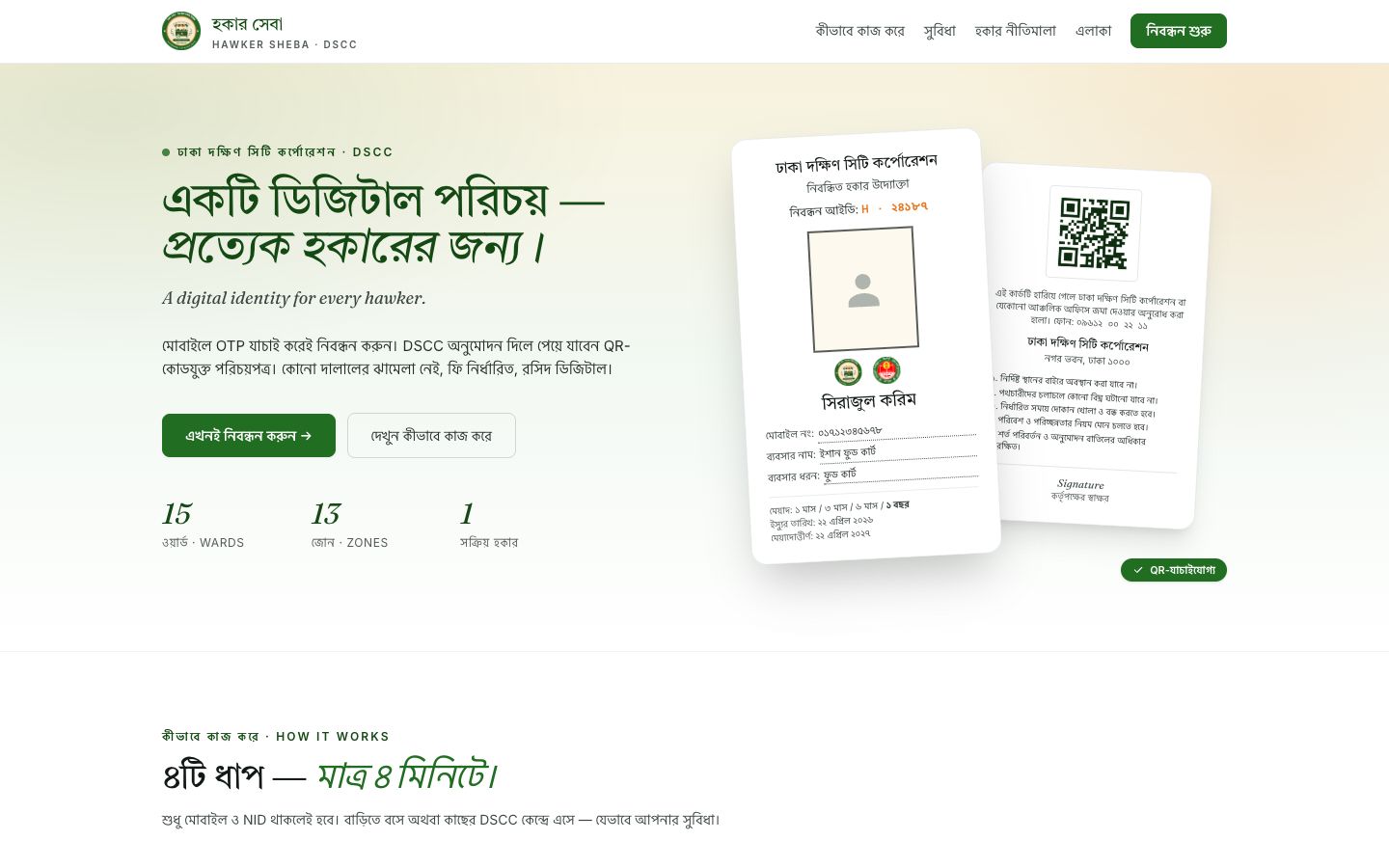
Street hawkers are part of everyday life in Dhaka. They are also among the least protected workers in the city: often without formal recognition, exposed to harassment over where they trade, and dependent on middlemen for paperwork.
Hawker Sheba gives every hawker in Dhaka South City Corporation’s area a digital identity. The brief sounds simple; the design decisions behind it are worth sharing.
Four steps, about four minutes
The registration flow had one hard constraint: it must work for someone with only a basic phone, a national ID and a few minutes. We kept it to four steps:
- Enter your mobile number. An SMS code is sent to it.
- Confirm the code. This proves the number is really yours, so nobody can register in your name.
- Add a photo and business details. Name, NID, ward, and your trading spot marked on a map.
- Approval and ID card. DSCC reviews the application; once approved, you download and print a QR-coded ID card.
People can register at home or at a nearby DSCC centre with help, whichever suits them.
Why the map matters
The most contested question in street trade is where. So the trading location is not a typed address; it is a point picked on a map of DSCC-approved zones. That gives officials an accurate picture of who trades where, keeps applications inside permitted areas, and settles many disputes before they start.
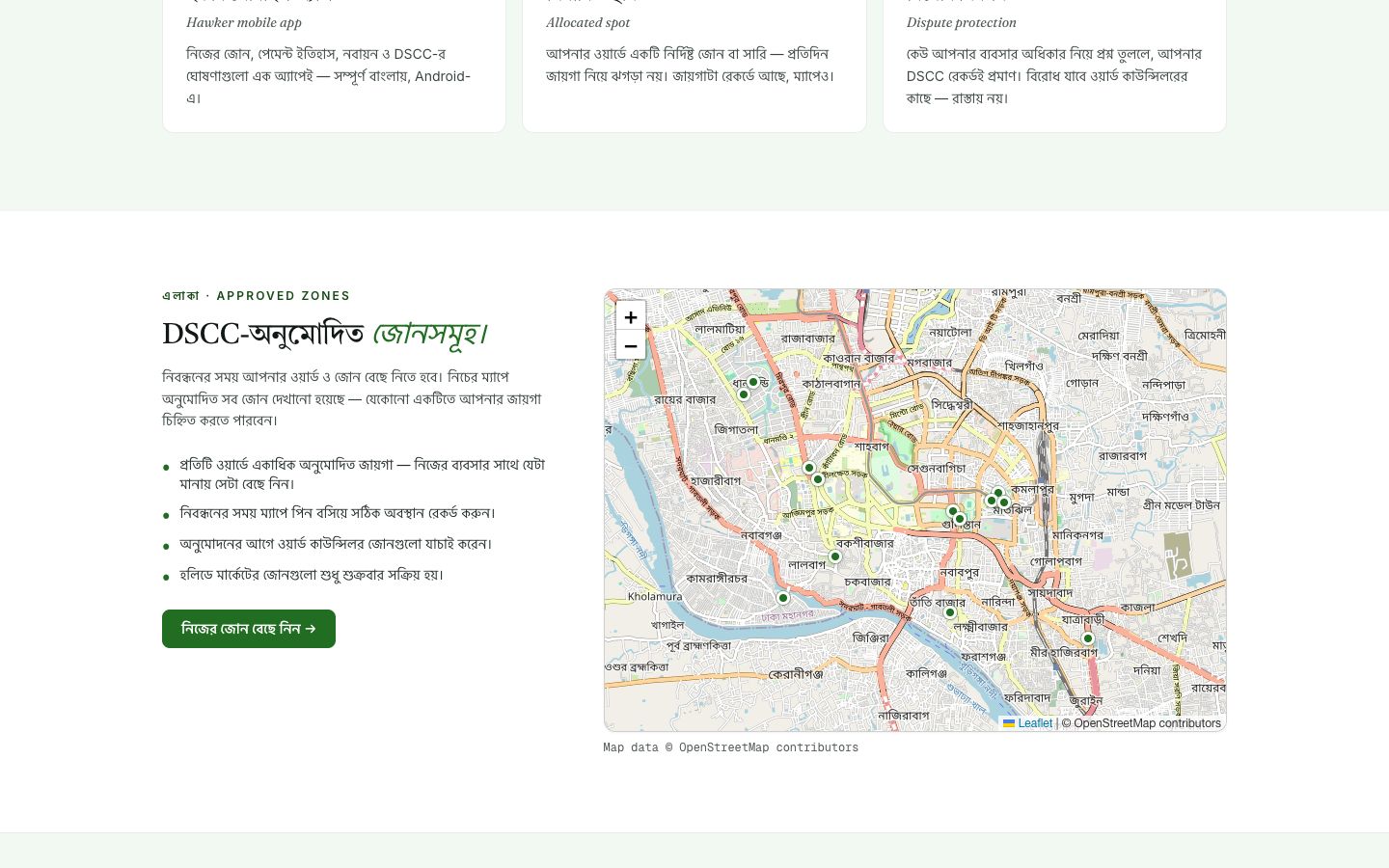
This is geospatial work in a very practical form: the map is the data model, not a decoration.
A card anyone can verify
A paper permit is easy to fake and hard to check. The Hawker Sheba ID card carries a QR code anyone can scan to verify in seconds: a police officer, a market committee or a customer. The card shows the hawker’s ID number, business name and type, validity period and the rules they agreed to.
Removing the middleman
Fees, deposits and tolls are published up front, payments can be made by bKash or Nagad, and receipts are digital. When the price is public and the receipt is automatic, there is nothing for a broker to sell.
Bangla first
The whole portal is written in Bangla first, with English alongside. For the people it serves, that is not a nice-to-have; it decides whether the service gets used.
Lessons for public-service software
- Design around the least-equipped user: a basic phone, patchy data, little time.
- Use verification you can explain: an SMS code and a scannable QR are understood by everyone.
- Put the map at the centre whenever the real question is “where”.
- Make fees and rules public to remove the need for intermediaries.
Building systems where location is the core data is the focus of our Geospatial Data Solutions service. If you are planning a registration, permit or licensing system, let’s talk.
Need help putting this into practice?
Talk to the team behind these products. We build AI, data and software for businesses like yours.